
Hubzu - Real Estate Auctions
Hubzu.comHouse & Home
3.971.00 Reviews
- Version
- 3.2.3
- Installs
- 100.00K
- Age Rating
- Everyone
Screenshots
Our Review of Hubzu - Real Estate Auctions
 Analysis by Appyee
Buying a home through an auction is a very different experience from browsing ordinary property listings, and that difference is exactly where Hubzu - Real Estate Auctions can be useful. I see it as a focused discovery tool for people who want to look at foreclosure and bank-owned homes rather than simply compare conventional listings. It is free, aimed at everyone, and developed by Hubzu.com, so the main appeal is easy access to a specialized corner of the housing market.
My honest view is that this is not an app I would use as my only home-search tool. I would use it alongside normal real estate apps, a lender or mortgage adviser, and careful property research. Auctions can expose opportunities, but they also demand more preparation and a greater tolerance for uncertainty than a standard house hunt. The app helps with the browsing stage; it does not turn an auction purchase into a routine shopping trip.
How I would decide whether Hubzu fits my search
The first question is not whether the app is free or easy to install. The better question is what kind of property search I am actually doing. If I want a conventional home with a predictable viewing process, familiar offer rules, and plenty of comparable listings, a mainstream real estate app is probably a better starting point. If I specifically want to investigate distressed properties, foreclosure opportunities, or bank-owned homes, Hubzu is much more relevant.
I would also think about how much work I am prepared to do after finding an interesting listing. Auction properties can require closer attention to deadlines, property condition, occupancy, financing, title questions, and local procedures. Those responsibilities do not disappear because I found the property on a phone. The app is most valuable when I treat each listing as a lead for further investigation, not as a finished buying opportunity.
The audience size gives some useful context. Hubzu has passed 100K+ installs and holds a 3.9 average from about 260 ratings. That suggests a real user base and a reasonably mixed experience rather than universal praise. I would read the rating as a sign that the app can be useful for its intended niche, while still expecting some friction depending on location, listing availability, and what I need to do inside the app.
Device compatibility is also straightforward for many people: the current version is 3.2.3 and requires Android 8.0 or later. On a reasonably recent Android phone, that should not be a major barrier. The age rating is Everyone, which makes sense for a property-search application, although the financial seriousness of an auction means the practical audience is still adults who understand the risks of real estate decisions.
What I look for before trusting an auction listing
When I find a property that catches my attention, I do not stop at the attractive starting impression. I first check whether the location works for my daily life, then I compare the property with ordinary listings in the same area. A low-looking auction opportunity can lose its appeal once repairs, transport, taxes, insurance, legal work, or financing constraints enter the picture.
One useful habit is to separate three questions: do I like the property, can I realistically buy it under auction conditions, and would the total cost still make sense after ownership begins? Keeping those questions separate prevents the common mistake of becoming emotionally attached to a listing before understanding the process around it.
I would also save notes outside the app for every serious candidate. I might record the address, visible condition, questions to verify, expected repair areas, and the reason the property is worth further research. This is a small workflow improvement, but it matters when several listings begin to blur together. Auction browsing can produce many possibilities quickly, while the difficult part is narrowing them down responsibly.
Where the focused auction approach works well
The strongest part of Hubzu is its focus. Instead of making me search through a broad collection of ordinary homes and hoping to encounter distressed inventory, it points my attention toward foreclosure and bank-owned opportunities. That makes the app more useful for investors, bargain hunters, and buyers who are deliberately exploring a less conventional route into property ownership.
I also appreciate the convenience of having this kind of search available on a mobile device. Property research often happens in small gaps during the day: while commuting as a passenger, waiting for an appointment, or comparing neighborhoods after work. A dedicated app makes it easier to revisit the search when I am away from a desktop, then decide which properties deserve deeper attention later.
For an investor, the value is less about casually scrolling and more about building an initial pipeline. I can use the app to identify areas with potentially relevant inventory, then move each candidate into a separate research process. That is a better use of the app than treating every listing as a bargain. The focused inventory can help me discover possibilities I might not encounter through a standard apartment or home-search routine.
For a first-time buyer, the app can also be educational, provided it is used carefully. Seeing auction-oriented homes may help explain why these purchases require a different mindset. The experience encourages me to ask practical questions earlier: can I inspect the property, what condition might it be in, how quickly would I need to act, and what professional advice should I obtain before committing?
A realistic way I would use it during a busy week
Imagine I am looking for a home within driving distance of my workplace but have limited time for property research. I might open Hubzu during a lunch break, review auction-oriented homes in the areas I can realistically reach, and shortlist only those that match my basic location and budget goals. I would not bid or make a financial commitment during that first pass. Instead, I would write down the addresses and investigate them later using maps, local records, conventional listings, and professional guidance.
On the second pass, I would remove anything that is too far away, visibly unsuitable, or impossible to finance under my circumstances. I would then compare the remaining properties with regular homes nearby. If an auction listing still looks attractive after that comparison, I would contact the appropriate professionals and verify the steps required before treating it as a serious opportunity.
This workflow shows where the app fits best: discovery first, due diligence second. It also protects me from a common trap in auction browsing, where the excitement of a possible discount makes the property feel more certain than it really is.
Important friction that can change the experience
The same specialization that makes Hubzu interesting can make it unsuitable for casual buyers. Auction listings are not automatically simple alternatives to ordinary homes. A property may need more research than a conventional listing, and the condition or transaction requirements may be less comfortable for someone who wants a predictable move-in plan.
Mobile browsing can also encourage rushed decisions. A phone screen is convenient for finding a property, but it is not the ideal place to absorb every legal, financial, and condition-related detail. I would avoid making a serious decision while distracted, especially if I had not yet confirmed the practical requirements of the auction.
Another limitation is that the app’s usefulness depends heavily on whether its inventory matches my location and goals. A focused marketplace is valuable when it contains relevant opportunities. If I am searching for a particular neighborhood, property type, or conventional purchase arrangement, a broader real estate service may give me a more complete picture. I would not interpret a thin result set as proof that no suitable home exists; it may simply mean that this particular channel is not the right one for that search.
When an ordinary real estate app is the better choice
Traditional property-search apps are generally better for people who want broad market coverage, everyday listings, neighborhood comparison, and a familiar buying path. They are also more suitable when I am trying to estimate normal asking prices or understand what a typical home in an area looks like. Hubzu can contribute to that research, but it should not replace it.
I would choose a conventional service first if I needed a home quickly, had little experience with real estate transactions, or could not comfortably handle unexpected repair and legal questions. The lower-stress option is often more valuable than the possibility of finding a special deal. A property that looks inexpensive at the beginning is not necessarily cheaper once all responsibilities are considered.
On the other hand, an investor or experienced buyer may find a broader app too general. If my purpose is specifically to monitor foreclosure and bank-owned opportunities, Hubzu’s narrower focus saves time at the discovery stage. The trade-off is that I must bring more of my own analysis and caution to the process.
What switching to Hubzu really costs
Because the app is free, the direct financial cost of trying it is low. The more meaningful cost is time and attention. I need to learn how to interpret auction-oriented listings, organize candidates, compare them with ordinary market options, and verify details before acting. That learning curve is worthwhile only if this type of property is genuinely part of my plan.
There is also an opportunity cost. Every hour spent chasing an unsuitable auction property is an hour not spent viewing conventional homes, speaking with a lender, or checking neighborhoods that better match my needs. I would set a simple limit: use Hubzu for targeted research, but stop pursuing a listing when the facts no longer support it. That keeps the app from turning into an endless stream of speculative possibilities.
For someone already using ordinary real estate apps, I would not replace them immediately. I would add Hubzu as a second search channel and compare what it reveals with the broader market. This makes switching nearly risk-free as a browsing decision while preserving the tools I already use for normal listings.
For someone starting from scratch, I would first clarify financing, preferred areas, and acceptable property condition. Only then would I add auction searches. Without those boundaries, the app can make an ambitious purchase seem easier than it is because the first step—finding a listing—is much simpler than the steps that follow.
Small habits that make the app more useful
My most important tip is to treat every promising listing as a research project, not a deal. I would create a short checklist before spending serious time on any property: location, likely condition, financing fit, professional inspections or advice, transaction timing, and total ownership cost. The checklist keeps the search grounded when a listing looks unusually appealing.
A second helpful habit is to compare auction candidates with nearby conventional properties before deciding that the auction route offers value. This comparison can reveal whether the opportunity is genuinely distinctive or simply presented in a way that makes the initial price more noticeable. The point is not to predict a final cost from the app; it is to test whether further investigation is justified.
Third, I would use the app for pattern recognition rather than only individual properties. After several sessions, I may begin to understand which locations repeatedly interest me, which property conditions I am unwilling to handle, and which candidates fail my practical requirements. That makes later searches faster and reduces impulsive attention on listings that were never realistic.
Finally, I would keep my expectations modest. The app can help me find possibilities, but it cannot remove the need for local knowledge, financial planning, and careful verification. That is not a defect unique to Hubzu; it is part of buying property through an auction channel. The mistake would be expecting a mobile interface to solve a transaction that is complicated in the real world.
My recommendation for different kinds of users
I recommend Hubzu to experienced buyers, real estate investors, and curious shoppers who specifically want to explore foreclosure or bank-owned homes. Its focused purpose makes sense for those users, and the free entry point makes it easy to add to an existing property-research routine. I would especially recommend it as a discovery companion rather than as a complete replacement for broader housing apps.
I would recommend it more cautiously to first-time buyers. It can be useful for learning and finding leads, but I would want those users to have support from qualified professionals and a clear understanding of their financial limits before taking any serious step. The app’s Everyone rating describes its accessibility, not the simplicity of the purchases found through it.
I would tell a buyer to skip it for now if they need a predictable, conventional home search, have no time for additional investigation, or are uncomfortable with uncertain property condition and auction procedures. In those situations, a mainstream real estate app and a traditional buying process are likely to fit better.
Overall, I see Hubzu - Real Estate Auctions as a specialized tool with a clear job: helping people discover foreclosure and bank-owned property opportunities from a mobile device. It wins through focus and convenience, but it asks the user to supply judgment, patience, and due diligence. I would install it for targeted exploration, keep ordinary real estate resources beside it, and only move from browsing to action after the property survives a much deeper review.
The developer, Hubzu.com, has created an app that is most useful when I understand its boundaries. It is not a shortcut to a guaranteed bargain, and it is not the right answer for every home search. Used as one carefully chosen part of a larger decision process, though, it can give the right buyer a practical way to uncover opportunities that broader housing apps may not place at the center of the experience.
Verdict
Strengths of Hubzu - Real Estate Auctions
- Access to foreclosure and bank-owned property auctions
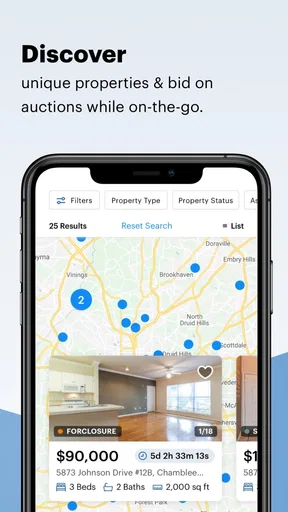
- Search filters help narrow listings by location and property type
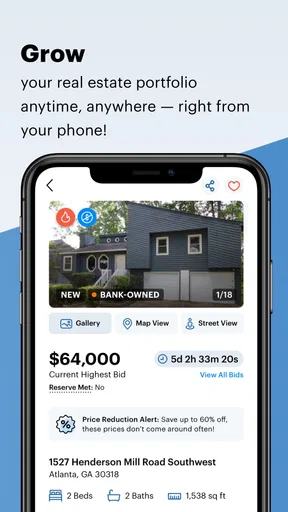
- Property details, photos, and auction terms are easy to review
- Useful for comparing investment opportunities in multiple markets
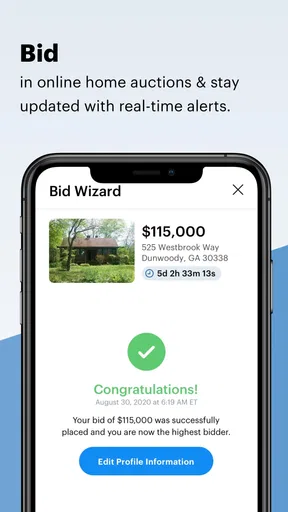
- Auction alerts can help track properties before bidding closes
Limitations of Hubzu - Real Estate Auctions
- Some listings may require extensive repairs or have limited information
- Auction fees and buyer premiums can increase the final purchase cost
- Not every property can be inspected easily before placing a bid
- Financing and closing requirements may be stricter than traditional sales
- Availability and auction rules can vary significantly by property
Similar Picks in This Category
View All
Universal TV Remote Control
CodeMatics Media Solutions3.9

AlfredCamera Home Security app
Alfred Systems Inc.4.7

Planner 5D: AI Home Design
Planner 5D4.5

Universal Tv Remote-Cast to TV
One Music Player4.1

Zillow: Homes for Sale & Rent
Zillow Group4.8

99acres Buy/Rent/Sell Property
infoedge.com4.3
Frequently Asked Questions
What is Hubzu - Real Estate Auctions, and how does it work?
Hubzu is an online real estate marketplace where users can browse properties offered through auctions, including homes, investment properties, foreclosures, and occasionally commercial listings. After creating an account, you can review property details, auction terms, photos, and deadlines, then submit bids when eligible. The highest bid is not always automatically accepted, because seller approval and additional conditions may apply.
Do I need an account to bid on properties through Hubzu?
Yes, users generally need to register for a Hubzu account before placing bids. The platform may require contact information, identity verification, and other details depending on the property and auction requirements. Registration lets you save listings, monitor auction activity, receive notifications, and review your bidding status. Always complete verification early, since last-minute approval could prevent you from participating.
Are there additional fees or deposits when using Hubzu?
Potentially, yes. Depending on the listing, bidders may encounter buyer premiums, earnest-money deposits, transaction fees, service charges, closing costs, inspection expenses, taxes, or other property-specific costs. The final price is therefore not necessarily the total amount you will pay. Before bidding, carefully read the auction terms, payment deadlines, deposit requirements, and closing instructions displayed for that property.
Can I inspect a property before bidding on Hubzu?
Inspection opportunities vary by property and location. Some listings may provide interior access through scheduled showings, while others may only offer exterior viewing or limited information. Properties sold through auction can be offered as-is, and photos or descriptions may not reveal every issue. I recommend arranging an inspection whenever permitted and researching liens, occupancy, repairs, and local records before submitting a bid.
What happens after I win a Hubzu auction?
Winning an auction does not always mean the purchase is immediately finalized. The seller may need to approve the bid, and you may then have to sign documents, submit an earnest-money deposit, arrange financing or proof of funds, and meet strict closing deadlines. Failure to complete these steps can result in losing the deposit or facing other penalties, so review the contract carefully.
